






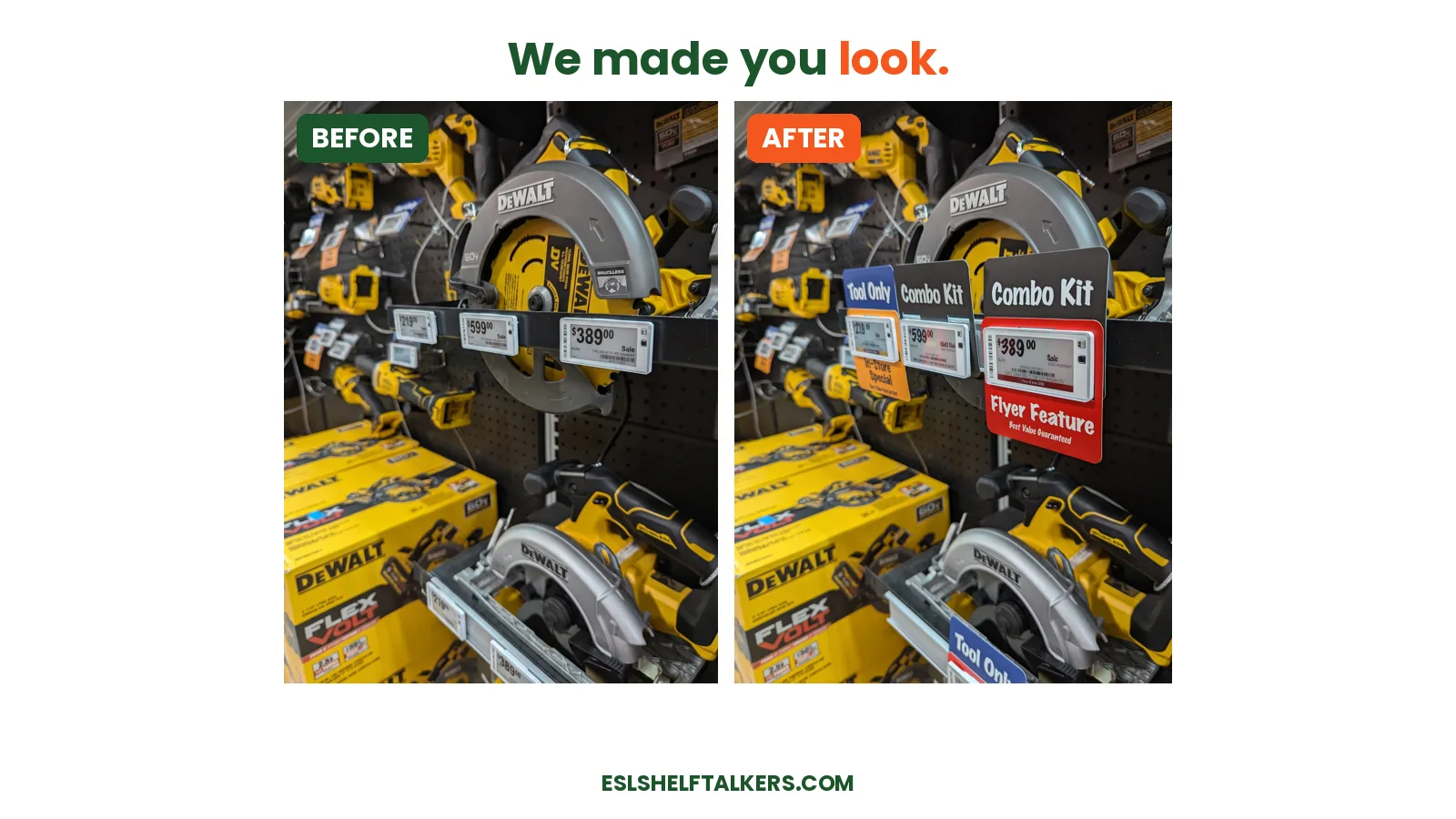
Shelf Talkers for Electronic Shelf Labels: Which ESL Systems Are Compatible?
If you’ve rolled out electronic shelf labels (ESLs), you’ve already solved the pricing problem. Your prices update in real time, your staff isn’t running around with label guns, and your shelf edge looks clean. So here’s the question we get every week:
“Can I still run shelf talkers on my ESL rails?”
Short answer: yes — as long as they’re engineered to fit your system. Long answer below, broken down by provider.
Why “ESL-compatible” actually means something
Not all shelf talkers are created equal. A generic clip-on tag designed for a paper-ticket molding won’t sit right on an ESL rail — it’ll cover the screen, block the e-paper refresh, or pop off when a cart bumps it. The whole point of an ESL is visibility and automation; a poorly-fitted talker undermines both.
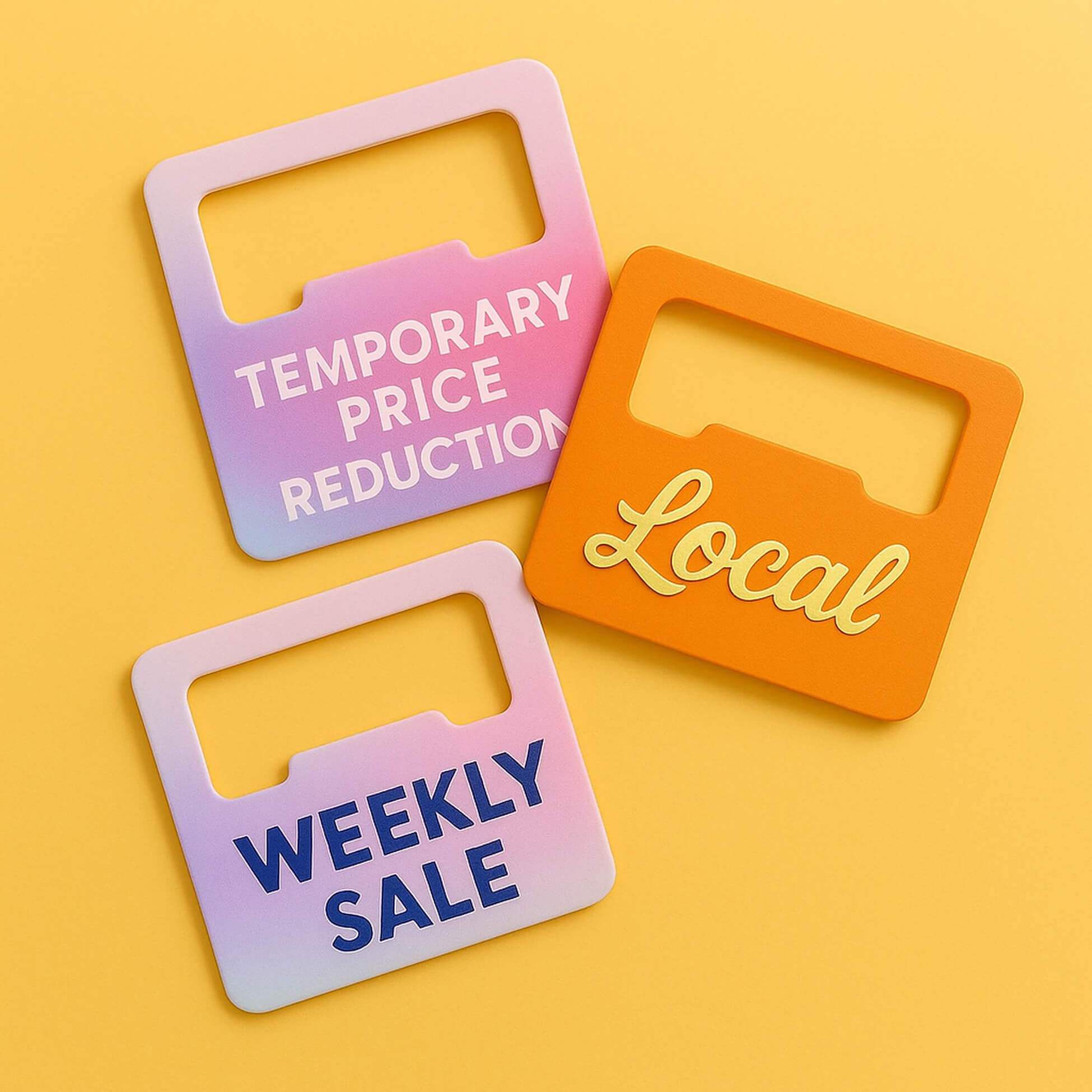
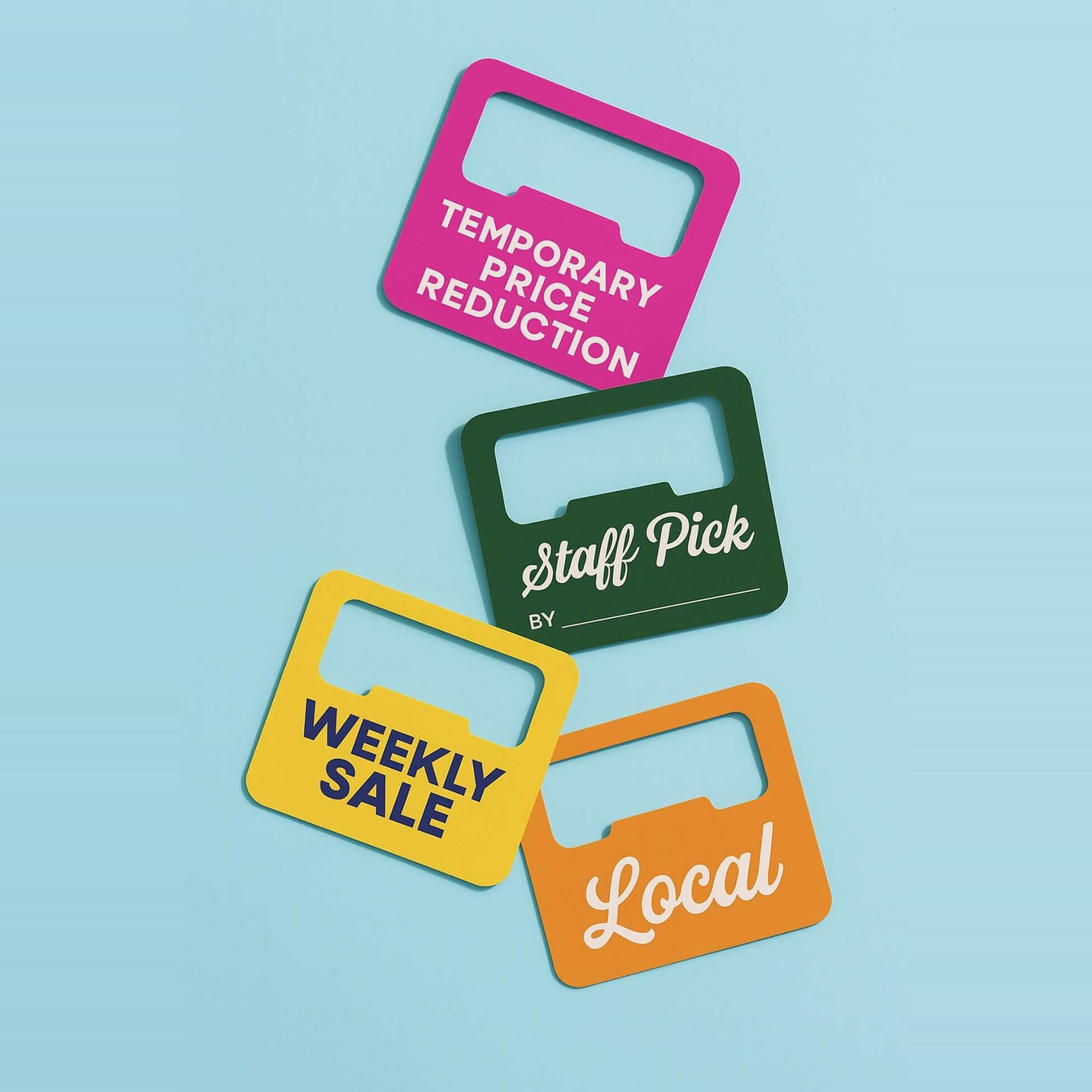
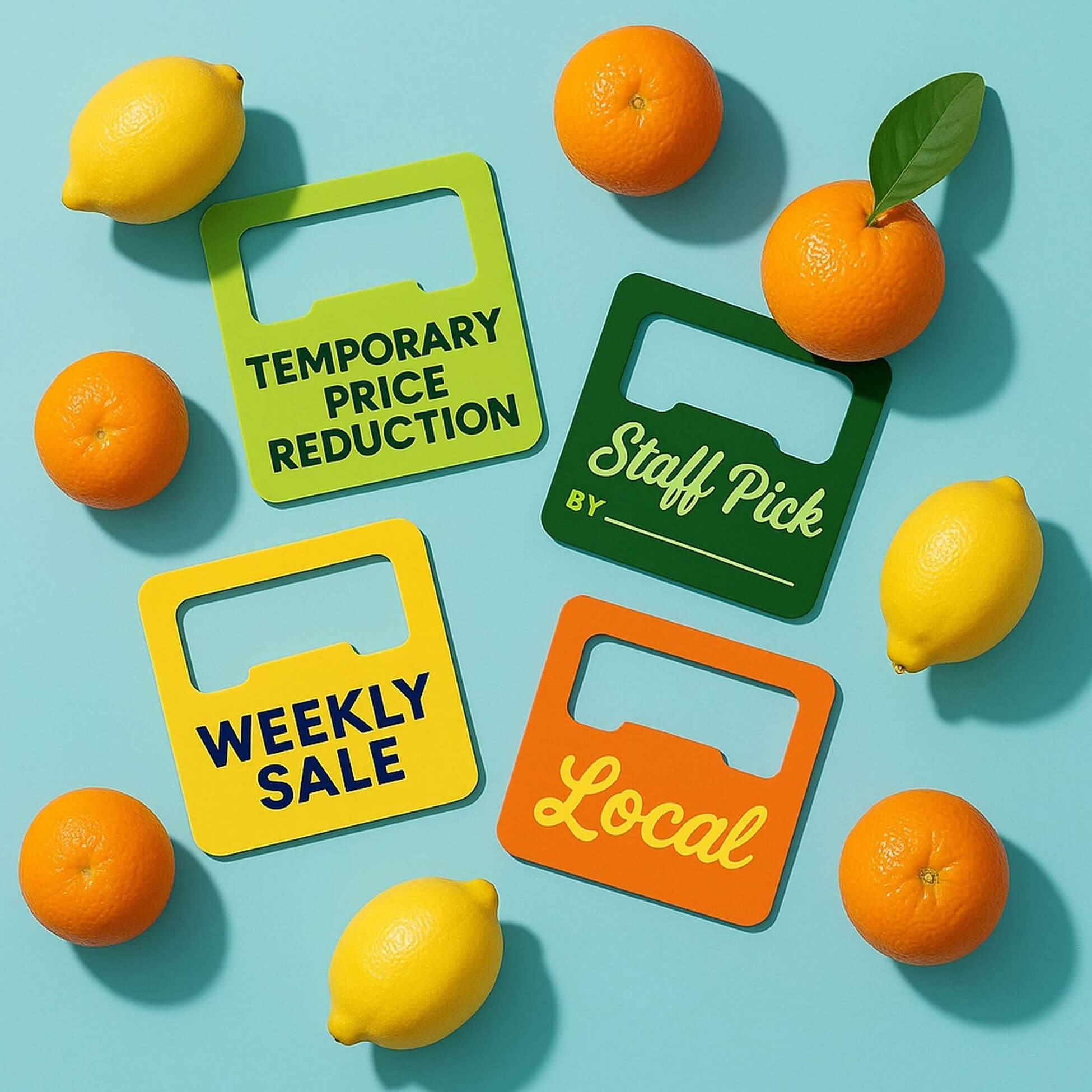
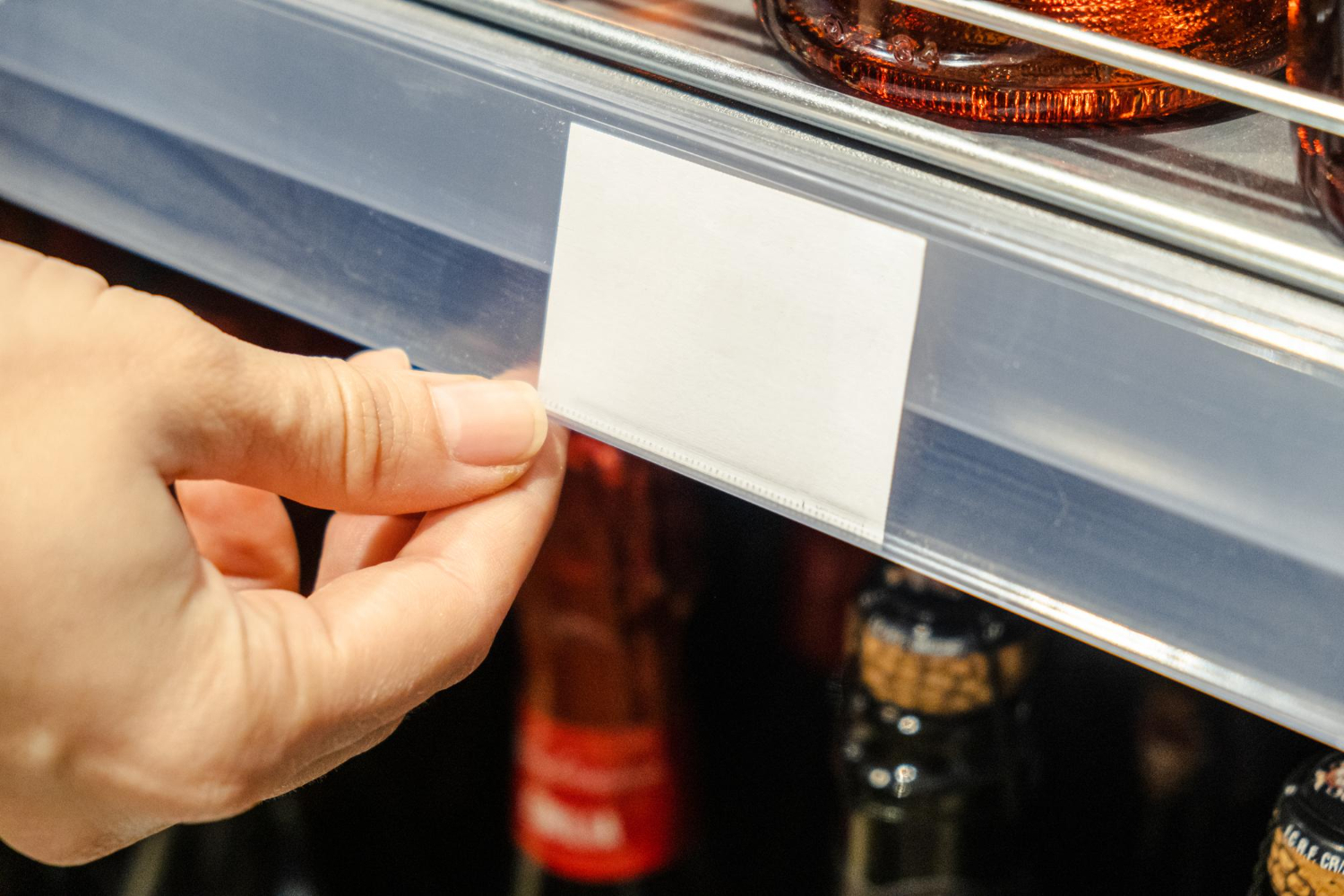
A proper ESL shelf talker is built around three things: the rail profile (the shape of the molding your labels snap into), the label dimensions (so the talker frames the screen instead of hiding it), and the attachment method (snap, clip, or slide — no tools, no adhesive residue).
That’s why we don’t sell off-the-shelf tags. We engineer a custom dieline for your exact rail. Here’s how that plays out across the major ESL platforms.
Compatibility by ESL provider
SoluM (Newton family) — One of the most common systems we see in North American grocery. SoluM rails have a distinct profile, and our talkers are built to frame the label without interfering with the NFC/refresh zone.
VusionGroup (SES-imagotag) — The largest ESL deployment worldwide. We fit-test against VUSION rail samples so the talker snaps in flush and stays put on high-traffic aisles.
Pricer — Pricer’s flash-based labels and rail system have their own quirks. Our dielines account for the rail depth so the talker sits proud of the shelf edge, where shoppers actually see it.
Hanshow — Common in fast-growing retail and convenience. We engineer to the Hanshow rail so talkers clip without blocking the display.
Opticon and Displaydata — Less common, but we’ve fit talkers to these too. If you’re running one of these, send us a rail sample and we’ll engineer around it.
Running something else? Send us one label and a short piece of the rail you’re using. We’ll analyze it and build a talker that fits — that’s literally step one of our process.
Do shelf talkers still work in an ESL world?
ESLs are efficient — but they’re quiet. A small e-paper price tag doesn’t create urgency, doesn’t highlight a promo, and doesn’t stop a shopper mid-aisle. That’s not what they’re for.
Shelf talkers have, for decades, lifted sales by at least 10% on promotional paper tickets. That uplift doesn’t disappear when you switch to ESLs — it just needs a tag designed to live alongside the label instead of replacing it. You keep the automation; you add back the visibility.
What to do next
If you’re running any ESL system and want to see how a talker fits your rail, the fastest path is a mock-up:
- Ship us one ESL and a piece of your rail.
- We design a structural mock-up — no branding yet — so you can see the fit.
- You approve, we quote, you add your artwork, we build and ship.
Most orders are ready in 2–3 weeks, and every talker we make is FSC®-certified and built from recycled-plastic material that’s reusable and tear-proof.
Ready to see how a talker fits your rail? Start your mock-up →